Nature
Cancer states · cell of origin · regeneration
Finding the rules beneath cancer’s complexity.
The Bremner Laboratory asks why one mutated cell becomes cancer while another does not—and whether shared tumour states can reveal vulnerabilities that transcend molecular heterogeneity.
TorontoCancer biologyRegeneration
01
Research perspective
One mutation is never the whole story.
Cancer-causing defects act within a developmental and cellular context. The Bremner Laboratory studies how lineage identity, cell-cycle timing, YAP-defined tumour states and adaptive plasticity determine whether cancer begins, how it survives and which therapies can eliminate it. The same systems-level approach is used to understand retinal degeneration and regeneration.
Read the laboratory’s research framework ↗01↗02↗03↗04↗
Binary YAP cancer states
We investigate how opposite YAP/TEAD activity divides diverse tumours into two higher-order states with contrasting lineage programmes, behaviours and treatment vulnerabilities.
Cell-cycle duration and transformation
We study why an oncogenic mutation can be harmless in most cells yet transform a specific developmental or lineage context.
Retinoblastoma and retinal regeneration
We use the retina to understand how developmental circuitry creates cancer susceptibility—and how neurons can be protected or encouraged to regenerate.
Functional genomics and therapeutic synergy
We combine systematic perturbation with mechanistic validation to identify genetic dependencies and drug combinations that produce deeper cancer responses.
Cell Reports
Deneddylation of ribosomal proteins promotes synergy between MLN4924 and chemotherapy to elicit complete therapeutic responses
Clinical Cancer Research
Targeting the Ubiquitin-Proteasome System Using the UBA1 Inhibitor TAK-243 is a Potential Therapeutic Strategy for Small-Cell Lung Cancer
Cell Reports
An immature, dedifferentiated, and lineage-deconstrained cone precursor origin of N-Myc-initiated retinoblastoma
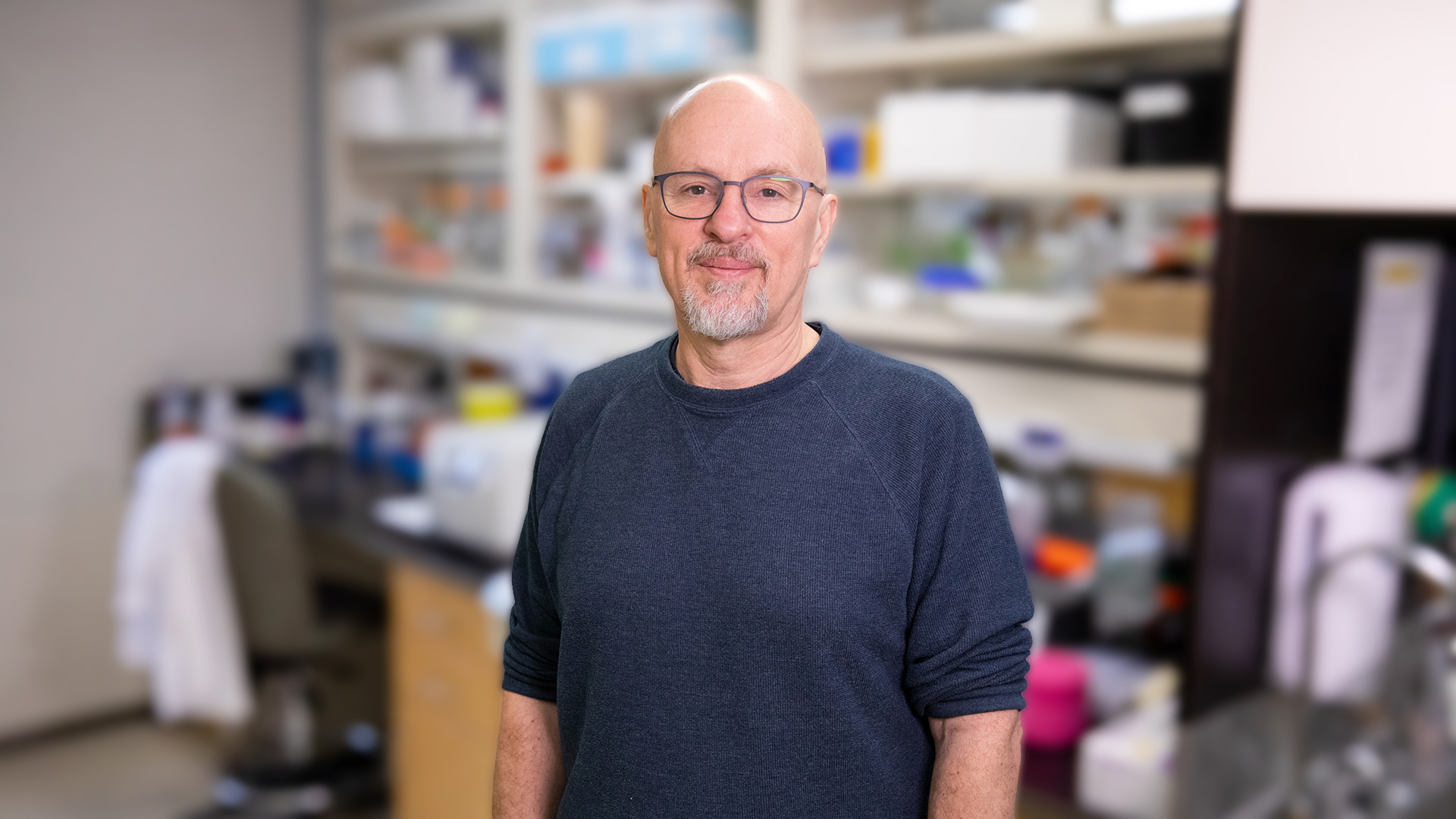
Principal investigator
Rod Bremner, Ph.D.
Senior Investigator · Professor
Rod Bremner, Ph.D., is a Senior Investigator and the Freiberg Cancer Research Chair at the Lunenfeld-Tanenbaum Research Institute, Sinai Health. He is Professor in the Departments of Ophthalmology & Vision Sciences and Laboratory Medicine & Pathobiology at the University of Toronto. His laboratory asks why the same cancer-causing defect transforms only certain cell types, and whether shared higher-order tumour states can reveal vulnerabilities that cut across molecular heterogeneity. The group combines single-cell and functional genomics, proteomics, high-throughput screening, three-dimensional culture and in vivo models to study cancer initiation, therapeutic resistance, retinoblastoma and retinal neuroprotection and regeneration.
Meet the laboratory ↗Join the laboratory